Content
You’ve decided to get skincare treatments in Korea. Whether you’re coming specifically for treatments or adding a clinic visit to an existing Seoul trip, a little preparation goes a long way toward getting the best possible results.
This guide covers what you actually need to do — from the weeks before your trip to the day you arrive at the clinic.
Before Your Trip: Define What You Want
The single most important thing you can do before arriving in Seoul is get clear on what you want to address.
Identify your top skin concerns. Be specific. “I want better skin” doesn’t give your dermatologist anything to work with. “I have sun spots on my cheeks, enlarged pores on my nose, and I’m starting to notice my jawline sagging” tells them exactly what to assess. The more specific you are, the more targeted your treatment plan will be.
Take photos. Photograph your face in natural daylight (not bathroom lighting) from the front, both sides, and 45-degree angles. No makeup, no filter. These photos serve two purposes: they help you communicate your concerns to your dermatologist, and they give you a baseline to compare results against later.
Be realistic about scope. Most of our clients do 1–3 treatments during their Seoul visit. This isn’t a limitation — it’s smart medicine. Your dermatologist will recommend what actually makes sense for your specific skin. Trying to cram five treatments into three days doesn’t produce better results — it overwhelms your skin’s healing capacity and increases the risk of complications.
Set a budget range. At premium Korean clinics, most clients invest between $2,000 and $7,000 on treatments. This might sound like a lot, but consider that a single Ultherapy session at a comparable US clinic costs $4,000–$8,000. In Korea, that same budget gets you Ultherapy plus Thermage plus Rejuran — a comprehensive anti-aging protocol — with room to spare.
Renera Tip: Don’t decide on specific treatments before your consultation. Korean dermatologists are exceptionally skilled at assessing skin and recommending what will make the biggest difference. Our clients often get better results by trusting the dermatologist’s recommendation than by arriving with a predetermined treatment list from social media. The digital skin analysis alone often reveals concerns you weren’t aware of.
Preparing Your Skin
The weeks before your trip matter. Your skin’s condition when you arrive directly affects how well treatments work and how quickly you recover.
2–4 weeks before your trip:
- Stop retinoids (tretinoin, retinol) if you’ll be getting laser treatments. Retinoids thin the epidermis and increase sensitivity. Your dermatologist will advise on the specific timeline.
- Stop strong AHA/BHA acids. Same reason — you want your skin barrier intact.
- Discontinue blood-thinning supplements like fish oil, vitamin E, and ginkgo biloba if you’ll be getting injectables. These increase bruising risk.
- Maintain consistent SPF 50+ sunscreen use. UV-damaged skin doesn’t respond as well to treatment, and any active sunburn rules out most laser procedures.
1 week before:
- Keep your routine simple. Gentle cleanser, moisturizer, SPF. No new products, no aggressive exfoliation.
- Hydrate well. Well-hydrated skin heals faster from any procedure.
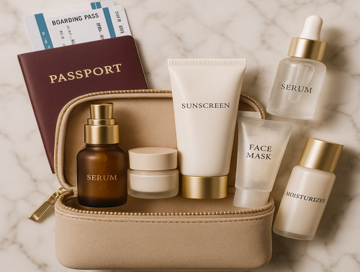
What to pack:
- A gentle, fragrance-free cleanser
- A simple moisturizer (fragrance-free)
- SPF 50+ sunscreen (or buy Korean sunscreen when you arrive — Korean SPF formulations are considered the best in the world)
- A wide-brimmed hat for outdoor time after treatment
Don’t overpack skincare. Seoul is the skincare shopping capital of the world. Olive Young stores are on every major street corner with the latest Korean products at excellent prices. You’ll want to buy recovery products here rather than bring them from home.
What to Expect: The Treatment Day
If you’re working with Renera, we handle the appointment scheduling, clinic coordination, and any language support you need. Here’s what a typical clinic visit looks like for our clients:
The Consultation (20–30 minutes)
Your dermatologist examines your skin in person and — at premium clinics — uses digital skin analysis tools. These devices photograph your face under multiple light spectrums (standard light, UV, polarized) to reveal pigmentation layers, vascular patterns, pore structures, and UV damage that aren’t visible to the naked eye.
Based on this analysis and your stated concerns, your dermatologist recommends a treatment plan. They’ll explain what each treatment does, why they’re recommending it for your specific skin, expected results, recovery timeline, and cost. At our partner clinics, this consultation is thorough and unhurried — typically 20–30 minutes.
This is the most valuable part of your visit. A good consultation determines everything that follows.
The Treatment (Same Day)
Many of our clients get their treatment on the same day as their consultation. The dermatologist has examined your skin, designed the treatment plan, and there’s no medical reason to wait. If the plan involves something requiring more preparation (like strong numbing for an intensive procedure), it may be scheduled for the following day — but this is the exception, not the rule.
The treatment itself is typically quicker than people expect. Most laser treatments take 15–30 minutes. Injectables take 10–30 minutes depending on the areas being treated. Even Ultherapy — the most time-intensive non-surgical lifting treatment — takes 60–90 minutes.
The entire visit — arrival, consultation, preparation, treatment, and aftercare — usually takes 90 minutes to 2 hours. Many of our clients visit a clinic for a morning appointment and are exploring Seoul by afternoon.
Aftercare
The clinic applies calming products immediately after treatment — a cooling mask, soothing serum, or LED therapy depending on what you had done. Your dermatologist provides detailed aftercare instructions: which products to use, what to avoid (sun exposure, saunas, intense exercise), and what’s normal during recovery.
If you’re working with Renera, we follow up to make sure your recovery is going smoothly. If you have questions or concerns about anything you’re experiencing, you can reach us directly.
Combining Treatments: What’s Realistic
If your dermatologist recommends more than one treatment, here’s how it typically works in practice:
Same-appointment combinations. Many treatments can be done together in a single visit. Common same-day pairings:
- Pico laser + Rejuran — laser for pigmentation, skin booster for overall quality. 45 minutes total.
- Botox + Skin Botox — wrinkle reduction plus pore refinement. 15–20 minutes total.
- Ultherapy + Rejuran — lifting plus skin quality. 90 minutes total.
Sequential treatments. If you’re getting something with a few days of recovery, you might come back for a lighter treatment once the initial recovery has settled:
- Potenza RF (day 1) → Rejuran (day 4, once redness settles)
- Fractional laser (day 1) → laser toning (day 5)
What most clients actually do: One primary treatment plus one complement. That’s it. A well-chosen pair of treatments produces excellent results without overloading your skin or your schedule.
Renera Tip: We plan your treatment around your schedule, not the other way around. If you have one free morning in Seoul, we’ll recommend zero-downtime treatments that deliver maximum impact in minimal time. If you have a full week, we can suggest options that take advantage of extra recovery time. Every plan is different because every client’s situation is different.
What’s Trending in Korean Clinics Right Now
Korean dermatology moves fast. Treatments that Korean dermatologists themselves rank highest in 2026:
S-tier (the treatments dermatologists get for themselves and their families): Potenza RF, Ultherapy, Onda Lifting, Botox, Radiesse, Curejet, Repot Laser, Revive
A-tier (highly recommended with minor drawbacks like cost or discomfort): Thermage, Juvelook Volume, Rejuran, Skin Botox, BBL, Thread Lifting, Fillers
If you’re hearing about treatments you haven’t encountered at home — Onda, Curejet, Repot, Revive, Radiesse in “booster mode” — that’s the Korea advantage. These are treatments available at Korean clinics 1–3 years before they reach most international markets.
Recovery and Your Travel Schedule
Zero downtime (go about your day normally): Botox, Skin Botox, Ultherapy, Thermage, Onda Lifting, laser toning, HydraFacial, Radiesse
Light recovery (1–3 days of mild redness or small bumps): Pico Laser, BBL, Rejuran, Juvelook, Revive, dermal fillers, Sculptra
Moderate recovery (3–5 days of visible redness): Fractional laser, Potenza RF, Curejet
Longer recovery (5–7+ days): Thread lifting, Repot Laser (per treated spot)
Most treatment combinations our clients do fall into the zero-to-light recovery range — meaning you can enjoy Seoul while your skin improves. If you’re getting something with moderate or longer recovery, plan it for the beginning of your stay.
Before flying home: Most treatments are fine to fly with same-day or next day. For anything with moderate recovery, give yourself at least 2 days before a long flight. Bring a heavy moisturizer and drink lots of water on the plane — cabin air is extremely dry and treated skin dehydrates faster.
Seoul Practicalities
Getting around. Most premium dermatology clinics are in Gangnam, Sinsa, and Apgujeong — all well-connected by subway. Seoul’s subway system is clean, efficient, safe, and easy to navigate with English signage. Taxis are affordable — a ride across Gangnam is typically $5–$10.
Where to stay. Staying near your clinic makes treatment days easier. Gangnam has excellent hotels at every level — from comfortable business hotels ($100–$170/night) to luxury properties like the JW Marriott Dongdaemun, Park Hyatt Seoul, or Josun Palace ($300–$600/night).
Best time to visit. Autumn (September–November) and spring (April–May) are ideal — mild weather, comfortable humidity, and less UV exposure during recovery. Winter works well for laser treatments since you’re naturally avoiding sun. Summer (June–August) is manageable but the heat and humidity can be uncomfortable during recovery.
Language. Our partner clinics have English-speaking staff or dedicated coordinators. If you’re working with Renera, we handle all communication so language is never a barrier.
Safety. Seoul is one of the safest major cities in the world. International visitors consistently comment on how comfortable they feel at any hour.
The Bottom Line
Planning a skincare trip to Seoul doesn’t need to be complicated. Know your concerns, prepare your skin, and let the experts handle the rest. Korean dermatologists are among the best in the world at assessing skin and recommending the right treatments. At premium Korean clinics, the quality of care is exceptional, the technology is cutting-edge, and the pricing makes comprehensive treatment realistic.
The most satisfied clients are the ones who come in with clear goals, trust the dermatologist’s assessment, and let the process work.
*Have questions about planning your skincare trip? Renera helps international visitors find the right treatments and clinics in Seoul. Every recommendation we make comes from firsthand experience and direct client feedback.*