Content
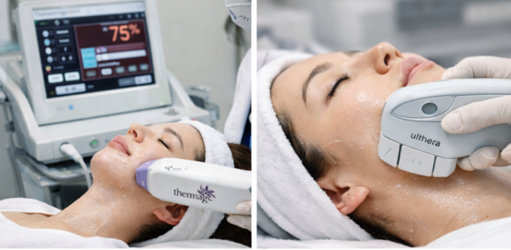
Ultherapy and Thermage are the two most established non-surgical lifting treatments in Korean dermatology. Both tighten and firm sagging skin without surgery or downtime, but they work through different mechanisms and target different depths — which means they’re best suited for different concerns.
Korean dermatologists rank Ultherapy as S-tier and Thermage as A-tier. Both are highly respected, with Ultherapy earning the top spot for its unmatched ability to reach the deepest structural layer of the skin.
Understanding the difference helps you have a more informed conversation with your dermatologist during your consultation — though ultimately, they’ll recommend what’s right for your specific skin based on what they see in the examination.
How They Work: Different Technology, Different Depths
Ultherapy: Deep Ultrasound Lifting
Ultherapy uses micro-focused ultrasound energy (MFU-V) to heat tissue at precise depths beneath the skin surface. What makes it unique among all non-surgical devices is its ability to reach the SMAS layer — the superficial musculoaponeurotic system — at approximately 4.5mm depth. This is the same deep structural layer that plastic surgeons manipulate during surgical facelifts. No other non-invasive device reaches this layer.
The ultrasound energy creates thermal coagulation points at three specific depths (1.5mm, 3.0mm, and 4.5mm), triggering a collagen and elastin remodeling response that produces gradual, natural-looking lifting over the following months.
Ultherapy also includes real-time ultrasound imaging, allowing the dermatologist to visualize your tissue layers during treatment. This means they can see exactly where the energy is being delivered and adjust accordingly — a significant safety and precision advantage over devices that treat “blindly.”
Korean clinics are global leaders in Ultherapy, with many offering both the Classic system and the newer Ultherapy Prime. The Prime features enhanced imaging, faster treatment times, and improved comfort. Korean practitioners also tend to use higher line counts (more energy delivery passes) than Western clinics, which typically translates to more dramatic results.
Thermage FLX: Surface Radiofrequency Tightening
Thermage uses monopolar radiofrequency (RF) energy to heat the dermis and subcutaneous tissue uniformly from the surface down to approximately 3mm depth. Rather than targeting a specific deep layer like Ultherapy does, Thermage creates broader, more even volumetric heating across the entire treated area.
This heating has two effects: it immediately contracts existing collagen fibers (creating a visible tightening effect on the day of treatment) and it triggers the body’s wound healing response to produce new, organized collagen over the following months.
The FLX system is the fourth and latest generation of Thermage. Its AccuREP technology optimizes energy delivery in real-time based on tissue impedance, and the Total Tip 4.0 vibrating handpiece integrates cooling and sensory distraction for significantly improved comfort compared to older Thermage versions.
Treatment is measured by “tip count” — the number of RF pulses delivered. Standard protocols use 600 tips for targeted areas and 900–1200 tips for comprehensive full-face treatment.
Side-by-Side Comparison
| Ultherapy | Thermage FLX | |
| Technology | Micro-focused ultrasound | Monopolar radiofrequency |
| Depth | Up to 4.5mm (reaches SMAS) | Up to 3mm (dermis/subcutaneous) |
| Primary effect | Lifting | Tightening |
| Best for | Jawline sagging, brow lift, neck | Pore refinement, texture, overall firmness |
| Treatment time | 60–90 minutes | 45–60 minutes |
| Comfort level | Moderate (numbing recommended) | Mild (usually no numbing needed) |
| Immediate results | Subtle | Some visible tightening |
| Full results | 2–6 months | 2–6 months |
| Duration | 12–18 months | 12–24 months |
| Price in Seoul | $2,000–$4,000 | $2,000–$3,500 |
| Price in US | $4,000–$8,000 | $3,000–$5,000 |
Who Should Choose Ultherapy?
Ultherapy is the stronger choice when your primary concern is structural sagging — meaning your skin has physically dropped from where it used to sit.
Jawline sagging. If your jawline has lost its definition and you’re developing jowls, Ultherapy’s ability to reach the SMAS layer provides the deepest non-surgical lifting effect available.
Brow drooping. Ultherapy is the only non-invasive treatment FDA-cleared specifically for brow lifting. If your brow line has descended and your upper eyelids feel heavy, this targets the cause directly.
Neck and double chin. Loose skin under the chin and along the neck responds well to deep ultrasound energy. The neck is one of the areas where Ultherapy’s depth advantage matters most.
Patients in their 40s–60s with moderate laxity. The deeper the treatment reaches, the more dramatic the lifting effect — and patients with moderate laxity see the most noticeable improvement.
Who Should Choose Thermage?
Thermage is the stronger choice when your primary concerns are skin quality and surface firmness rather than structural repositioning.
Enlarged pores. Thermage’s RF energy is exceptionally effective at contracting pore walls. Patients with visible pores — particularly on the cheeks and nose — often see dramatic improvement.
Skin texture. If your skin feels rough, crepey, or has lost its smoothness, Thermage improves texture uniformly across the treated area.
Overall tightness. If your skin feels loose and “tired” but hasn’t dramatically sagged, Thermage provides uniform tightening that refreshes your overall appearance.
Comfort-sensitive patients. Thermage FLX is significantly more comfortable than Ultherapy. If pain tolerance is a concern, Thermage’s vibrating handpiece with integrated cooling makes the experience tolerable for most patients without numbing.
The Combination: Why Korean Clinics Do Both
Experienced Korean dermatologists know that Ultherapy and Thermage work on different layers through different mechanisms. Combined, they deliver more comprehensive results than either treatment alone.
Ultherapy lifts from the deep SMAS layer upward — providing structural repositioning.
Thermage tightens from the surface dermis downward — improving texture, pores, and surface firmness.
This combination addresses aging at every depth simultaneously. Many of our clients get both during their Seoul visit, often in the same appointment or across two consecutive days.
The cost proposition makes this particularly compelling: the Ultherapy + Thermage combination at a premium Korean clinic ($3,500–$6,000 total) costs less than Ultherapy alone at most US clinics ($4,000–$8,000). You get more comprehensive treatment for less money.
Renera Tip: Rather than deciding between Ultherapy and Thermage before your consultation, let your dermatologist assess your skin and recommend the optimal approach. Some patients only need one. Others benefit significantly from the combination. And some might be better served by a different option entirely — like Onda for jawline fat reduction or Titanium for comfortable maintenance lifting.
What About Onda and Titanium?
The lifting category in Korean dermatology has expanded beyond just Ultherapy and Thermage. Two newer devices are worth knowing about:
Onda Lifting (S-Tier)
Onda uses targeted microwave energy (Coolwaves) for virtually painless lifting AND localized fat reduction. It’s particularly effective for jawline contouring where submental fat contributes to a less defined profile. Korean dermatologists rank it S-tier — the same tier as Ultherapy — primarily for its unique ability to address both laxity and fat in a single, comfortable treatment.
Choose Onda if: You want jawline contouring, you’re pain-sensitive, or your concern involves fat deposits rather than just loose skin.
Cost in Seoul: $800–$2,000 per session
Titanium Lifting
Titanium uses HIFU technology with a unique stamping delivery technique that distributes energy more evenly and comfortably than traditional HIFU. It’s faster (30–45 minutes), more comfortable, and significantly more affordable than Ultherapy.
Choose Titanium if: You’re younger (20s–40s) with early laxity, you want maintenance between annual Ultherapy sessions, or Ultherapy is too uncomfortable.
Cost in Seoul: $700–$1,500 per session
Recovery
All four lifting treatments — Ultherapy, Thermage, Onda, and Titanium — have essentially zero visible downtime. You can return to normal activities, apply makeup, go to dinner, and take photos immediately after treatment.
Ultherapy may involve mild tenderness along the jawline for a few hours. Thermage may show slight pinkness for 1–2 hours. Onda and Titanium are even gentler. None require special aftercare beyond normal skincare and sun protection.
This makes all four ideal for visitors — you can get treated in the morning and be exploring Seoul by afternoon.
The Bottom Line
Ultherapy and Thermage are both excellent treatments that serve different primary purposes. Ultherapy lifts deep tissue for structural improvement. Thermage tightens the surface for texture, pore, and firmness improvement. Your dermatologist will recommend the right approach — or combination — based on what they see in your skin.
The good news is that in Korea, you can afford to get the comprehensive treatment your skin actually needs rather than having to compromise based on budget. That’s the real advantage of getting lifting treatments in Seoul.
*Have questions about lifting treatments in Korea? Renera helps international visitors find the right treatments and clinics in Seoul. Every recommendation we make comes from firsthand experience and direct client feedback.*